iOS vs Android: Which Mobile OS is Right for You in 2024?


iOS vs Android: Which Mobile OS is Right for You in 2024?
The iOS versus Android debate remains the defining choice for smartphone buyers in 2024. Both operating systems have matured into powerful, polished platforms, but they diverge significantly in philosophy, ecosystem, and user experience. This detailed comparison examines the critical differences across customization, security, app quality, hardware, privacy, and long-term value to help you determine which OS aligns with your daily life.
Customization and Control: Freedom vs. Consistency
Android has long been the champion of personalization. In 2024, Android 14 and the latest custom skins from Samsung (One UI 6), Google (Pixel UI), and others offer deep system-level tweaks. You can change default apps for everything—phone, browser, SMS, even the launcher itself. Widgets are resizable and interactive, and you can install third-party app stores (like F-Droid or the Amazon Appstore) and side-load APK files directly. For power users, tools like Tasker automate complex workflows, and icon packs or custom ROMs (on unlocked devices) can transform the entire interface.
iOS 18, meanwhile, finally introduced a degree of customization unseen in previous versions. Users can now freely arrange app icons anywhere on the grid, tint icons to match wallpaper colors, and replace the lock screen’s flashlight and camera shortcuts with custom controls. Widgets have become more powerful, and the Control Center is now modular and customizable. However, Apple maintains strict guardrails. You cannot change default apps for core functions like phone calls or messages (though email and browser defaults are now adjustable). Side-loading apps remains restricted to the EU, and even there, Apple imposes stringent fees and security checks. The choice is clear: Android offers boundless freedom, while iOS provides a controlled, consistent experience that prioritizes ease of use over deep customization.
App Ecosystem and Quality: The Quantity vs. Polish Debate
Both app stores now host over 2 million apps, but their curation philosophy differs. The Google Play Store is more permissive, allowing virtually any app that meets basic security checks. This results in a vast library, including niche utility apps, emulators, and alternative app stores, but it also means a higher incidence of malware and low-quality clones. Google Play Protect scans all apps, but it is not foolproof, and users must remain vigilant.
Apple’s App Store is famously strict. Every app undergoes a human-led review process that enforces rigorous design guidelines, data privacy rules, and performance standards. This results in a higher baseline quality; apps on iOS tend to crash less, have fewer ads, and integrate more seamlessly with system features like Face ID, iCloud, and the Camera API. Developers often release new features and updates on iOS first due to the smaller number of device configurations. In 2024, this fragmentation remains a sore spot for Android. A developer must test across thousands of screen sizes, processors, and Android versions, which can delay updates or lead to bugs on certain devices. If you value cutting-edge apps and a polished, uniform experience, iOS leads. If you want access to the widest range of software, including emulators, torrent clients, and customization tools, Android is the choice.
Hardware Diversity vs. Integrated Experience
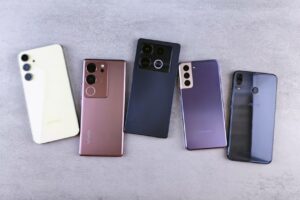
Android’s greatest strength is choice. In 2024, you can pick a foldable phone like the Samsung Galaxy Z Fold 6, a compact flagship like the Asus Zenfone 11 Ultra, a budget powerhouse like the Google Pixel 8a, or a gaming-focused device like the RedMagic 9 Pro. Prices range from under $150 to over $2,000. You can find phones with headphone jacks, expandable storage, stylus support, and even built-in projectors. This diversity means you can match hardware precisely to your priorities—battery life, camera quality, display refresh rate, or durability.
Apple’s approach is vertically integrated. You choose from the iPhone 16, 16 Pro, 16 Pro Max, and the iPhone SE. All share the same A18-series chip, ensuring near-identical performance regardless of model. The ecosystem is tight: iMessage syncs seamlessly across iPhone, iPad, and Mac; AirDrop transfers files instantly; and you can unlock your Mac with your Apple Watch. This integration extends to accessories like AirPods, which pair seamlessly, and the Apple Watch, which requires an iPhone. The trade-off is that you accept Apple’s hardware decisions—no headphone jack since 2016, no expandable storage, and a single charging port (USB-C as of 2023). For those who want a cohesive, hassle-free system, iOS is unbeatable. For hardware flexibility and choice, Android dominates.
Security, Privacy, and Data Control
Both platforms have made massive strides in security, but their approaches differ. iOS benefits from a sandboxed architecture that prevents apps from accessing data from other apps without explicit permission. Apple’s App Tracking Transparency feature, introduced in 2021, forces apps to ask before tracking you across other apps and websites—a move that reshaped digital advertising. In 2024, iOS continues to lead in user privacy, with features like on-device processing for Siri requests, iCloud Private Relay (a VPN-like service), and the ability to share only your approximate location.
Android has closed the gap considerably. Android 14 introduced granular privacy controls, including the ability to grant apps access to only selected photos (rather than your entire library), a privacy dashboard, and a permission auto-reset feature for unused apps. Google Play Protect now uses on-device AI to detect malware. However, Android’s openness creates inherent risks. Side-loading apps, even on secure devices like the Pixel 8, can expose you to malware. Manufacturer custom skins (e.g., Xiaomi’s MIUI or Oppo’s ColorOS) often include pre-installed apps and analytics that may not meet the same privacy standards as stock Android. For maximum privacy, iOS is the safer bet. For those willing to manage permissions carefully, Android offers powerful control but requires more user diligence.
Software Updates and Longevity
The gap here has narrowed dramatically. Apple provides five to six years of major iOS updates for iPhones, often with day-one availability. The iPhone XR from 2018 can run iOS 18, a testament to Apple’s long-term support. Security patches are delivered for even longer, often spanning seven years.
Google has matched this with the Pixel 8 series, promising seven years of OS updates and security patches—a huge leap from the previous three-year policy. Samsung now offers seven years for flagship Galaxy S24 models, and OnePlus and other manufacturers are extending support to four or five years. However, the catch is that these are promises, not guarantees. Budget Android phones often receive only one major update and irregular security patches. Even on flagship Androids, updates from manufacturers like Xiaomi or Oppo can take months to roll out after Google’s release. iOS remains the king of consistent, long-term support, but top-tier Android devices now compete directly.
User Interface and Learning Curve
iOS 18 retains its signature simplicity. The home screen is a grid of icons, the Settings app is logically organized, and the gesture-based navigation is intuitive. New users can pick up an iPhone and be productive within minutes. The learning curve is virtually nonexistent.
Android’s interface varies wildly depending on the manufacturer. Samsung’s One UI 6 is feature-rich but can feel overwhelming with its multiple menus (e.g., separate Quick Settings and notification panels). Stock Android on Pixel phones is cleaner and closer to iOS in simplicity, but still offers more settings to explore. Android’s notification system is universally praised as superior—it groups notifications by app, offers rich interactive buttons, and allows you to snooze or dismiss them from the lock screen without unlocking. iOS notifications have improved but still feel less efficient, especially for managing multiple messaging apps. If you prefer a consistent, straightforward interface, choose iOS. If you enjoy digging into settings and optimizing your workflow, Android will reward you.
Ecosystem and Interoperability
Apple’s ecosystem is sticky. Once you own an iPhone, an iPad, a Mac, AirPods, and an Apple Watch, switching to Android becomes painful because you lose seamless integration: iMessage, AirDrop, Universal Clipboard, Handoff, and iCloud Keychain. Apple’s services are deeply interwoven, and while some (Apple Music, Apple TV+) are available on Android, core features like iMessage remain exclusive.
Google’s ecosystem is more open but less cohesive. Google services (Gmail, Maps, Drive, Photos) work flawlessly on both platforms, but there is no equivalent to AirDrop for Android-to-Windows file transfer (Nearby Share works, but inconsistently). Android phones pair easily with Windows laptops via Phone Link, but the experience is not as polished as Apple’s handoff. Android also supports a wider range of smart home devices, smartwatches (Wear OS 4), and even Chromebooks. If you already own an Apple device, iOS locks you into a premium, integrated experience. If you use Windows, Google Workspace, or a mix of devices, Android is more flexible.
The Verdict on Hardware and Price
In 2024, the best camera phone is still a debate between the iPhone 16 Pro Max and the Samsung Galaxy S24 Ultra. Apple’s computational photography excels in video recording and color accuracy, while Android flagships offer more versatile zoom lenses, higher-resolution sensors, and manual controls for pro photographers. Battery life varies more on Android due to larger battery capacities (5,000mAh vs. 4,400mAh on iPhones), but iOS optimization often yields similar or better real-world endurance.
Charging speeds remain a stark difference. Android flagships now support 45W to 100W wired charging, reaching full charge in under 30 minutes. Apple’s iPhones max out at 27W via USB-C, taking over an hour. Android also offers reverse wireless charging (to charge earbuds or watches), while iOS added this feature later and with slower speeds. For budget-conscious buyers, Android provides exceptional value: the Pixel 8a or Galaxy A55 delivers 90% of the flagship experience for under $500. The cheapest new iPhone (iPhone SE) costs $429 but sacrifices modern design, camera, and battery life.
Final Considerations for 2024
Your choice should hinge on your priorities. Choose iOS if you value a seamless, private, and long-lasting experience across Apple devices, if you want the highest-quality app ecosystem with minimal malware risk, or if you prefer simple, consistent design. Choose Android if you want hardware flexibility, deep customization, fast charging, better notifications, access to a broader range of apps (including emulators), or more affordable flagship and mid-range options.
Neither OS is truly “better”—they are designed for different mindsets. In 2024, both deliver exceptional performance, but the differences in philosophy, freedom, and integration remain as pronounced as ever.