Ultimate Xbox Series X vs Xbox Series S Comparison Guide


Core Hardware Specifications: Raw Power Differences
The Xbox Series X houses a custom AMD Zen 2 processor with eight cores clocked at 3.8 GHz, paired with a GPU delivering 12.15 teraflops of compute power. This graphics processor features 52 compute units running at 1.825 GHz, enabling native 4K rendering at 60 frames per second, with support for up to 120 fps in select titles. The system includes 16 GB of GDDR6 RAM, with 10 GB dedicated to graphics at 560 GB/s bandwidth and 6 GB for system operations at 336 GB/s.
In contrast, the Xbox Series S utilizes a similar Zen 2 CPU but downclocked to 3.6 GHz in standard operation. Its GPU offers 4 teraflops from 20 compute units at 1.565 GHz, roughly one-third the graphical horsepower of its larger sibling. Memory allocation stands at 10 GB of GDDR6 RAM, with 8 GB at 224 GB/s for graphics and 2 GB at 56 GB/s for system functions. This reduction directly impacts resolution capabilities, targeting 1440p at 60 fps with upscaling to 4K, and 1080p-1440p at 120 fps.
Storage differences are equally pronounced. The Series X includes a 1 TB custom NVMe SSD with 2.4 GB/s raw throughput (4.8 GB/s compressed). The Series S halves this to 512 GB with identical speed specifications but less usable space after system software—approximately 364 GB versus 802 GB available on the Series X. Both consoles support the same proprietary Seagate storage expansion card for adding 512 GB, 1 TB, or 2 TB, though the Series S owner may find the 512 GB expansion more cost-proportional.
Design, Dimensions, and Physical Footprint
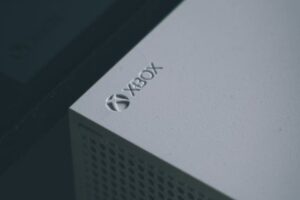
The Series X adopts a monolithic tower design measuring 15.1 cm x 15.1 cm x 30.1 cm, weighing 4.45 kg. Its vertical orientation draws air from bottom to top through a single 130 mm fan, exhausting heat through the perforated top panel. The matte black finish resists fingerprints but attracts dust visibly. The front panel houses a single USB-A port, an Xbox button with integrated LED, an eject button, and a slot-loading 4K UHD Blu-ray drive.
The Series S measures just 15.1 cm x 6.5 cm x 27.5 cm and weighs 1.93 kg, making it the smallest Xbox ever produced. The white matte chassis features a prominent black circular vent on the top, complementing its minimalist aesthetic. The front offers a single USB-A port, a sync button, and an infrared receiver for media remotes. Critically, the Series S lacks any optical disc drive, limiting game acquisition to digital purchases and Game Pass subscriptions. Both consoles support horizontal placement, though the Series X requires included stand feet to ensure proper airflow when laid flat.
Visual Output, Resolution, and Ray Tracing Performance
The Series X delivers native 4K gaming across the vast majority of optimized titles. Forza Horizon 5 runs at a locked 60 fps in 4K, while Gears 5 achieves 4K at 60 fps in its campaign mode and up to 120 fps in multiplayer with dynamic resolution scaling. Ray tracing effects—reflections, shadows, and global illumination—run at native 4K in games like Cyberpunk 2077 and Metro Exodus Enhanced Edition, typically at 30-60 fps depending on scene complexity.
The Series S targets 1440p, but many titles render around 1080p-1296p before upscaling. Halo Infinite runs at 1080p-1440p at 60 fps in multiplayer, while Call of Duty: Modern Warfare III maintains 1440p at 60 fps in standard modes. Ray tracing is present but heavily constrained: Doom Eternal uses RT reflections at 1080p, and Fortnite’s RT mode drops resolution to 720p to maintain 30 fps. The console uses AMD’s FidelityFX Super Resolution (FSR) 2.0-3.0 aggressively to reconstruct higher-resolution images from lower internal renderings, which introduces occasional shimmering and softer textures in fast motion.
Storage Management and Expansion Options
The Series X’s 1 TB SSD provides approximately 802 GB of usable space, accommodating 15-20 modern AAA titles (80-100 GB each) alongside smaller indie games and apps. The Series S’s 512 GB SSD leaves 364 GB free, forcing users to manage storage aggressively—often holding 6-10 games comfortably. Both support USB 3.0 external drives for Xbox One, Xbox 360, and original Xbox titles, but Series-optimized games require internal or expansion card storage.
The proprietary Seagate Storage Expansion Card (1 TB: $179.99; 2 TB: $299.99) acts as a seamless extension of internal storage for both consoles. Write speeds match the internal NVMe, enabling instant game switching without performance penalties. As of late 2024, Western Digital also offers licensed expansion cards, creating modest price competition. For the Series S owner, the 512 GB expansion card ($99.99) remains a practical compromise to maintain the console’s budget value proposition.
Disc Drive, Digital Ecosystem, and Game Acquisition
The Series X includes a 4K UHD Blu-ray player (BDXL support) with HDR10 and Dolby Vision disc playback. This enables physical game purchases, used game trading, and movie playback—critical for collectors and those with unstable internet connections. The optical drive also supports backward-compatible Xbox One discs without additional downloads for the base game (patches remain necessary).
The Series S is a fully digital console. All games must be purchased through the Microsoft Store or accessed via Xbox Game Pass Ultimate ($16.99/month) or Game Pass Core ($9.99/month). This eliminates physical media advantages—no resale market, no sharing discs with friends, and no discounted physical copies at retail. However, the Series S leverages Game Pass aggressively, and Microsoft offers “Smart Delivery” for most first-party titles, allowing a single digital purchase to grant the optimal version for either console automatically.
Backward Compatibility and Performance Enhancements
Both consoles run the same backward compatibility library spanning four generations: original Xbox (44 titles), Xbox 360 (632 titles), Xbox One (thousands), and Xbox Series optimizations. The Series X applies automatic HDR, improved frame rates (doubling to 60 fps in many Xbox 360 titles), and 16x anisotropic filtering to older games without developer patches. The Series S applies these same enhancements but at lower native resolutions—typically 1440p upscaled versus the Series X’s native 4K.
The Xbox One X Enhanced program’s heavy 4K assets cause a unique issue on the Series S: Microsoft requires backward-compatible Xbox One games to run in the Xbox One S profile rather than the Xbox One X profile, meaning the Series S cannot access the high-resolution texture packs designed for the One X. This results in softer visuals and reduced draw distances in titles like Red Dead Redemption 2 and Assassin’s Creed Odyssey compared to what the older, more powerful Xbox One X achieved in 2017—a notable regression in backward compatibility fidelity.
Game Library, Developer Targeting, and Performance Parity
The Series X runs every Xbox title at its highest possible fidelity: native 4K with ray tracing, maximum texture quality, and sustained 60-120 fps depending on developer targets. Recent releases like Starfield achieve 1440p-2160p dynamic resolution at 30 fps in Performance Mode, while the Series S runs the same game at 900p-1440p dynamic resolution at 30 fps with lower texture detail and reduced draw distances.
The Series S presents a significant optimization challenge for developers. The console’s 4 teraflops and 10 GB shared memory require substantial downscaling of visual settings, texture resolutions, and sometimes frame rate targets. Some games launch with parity issues: Baldur’s Gate 3 (late 2023) released on Series X in a stable state but arrived on Series S with delayed split-screen co-op and lower texture streaming performance. The mandatory parity clause—Microsoft requires feature parity across both consoles for Game Pass titles—has led to delays in cross-platform releases as developers balance the lower hardware ceiling.
Pricing, Value, and Total Cost of Ownership
The Xbox Series X launched at $499.99 in November 2020, with occasional discounts during holiday sales or bundle promotions (typically $449.99-$479.99 with a game or extra controller). The Xbox Series S launched at $299.99, frequently dropping to $249.99 during sales events or as part of Game Pass bundle offers. These price points have largely held steady through 2025, with the Series S occasionally reaching $219.99 at third-party retailers during clearance events.
Total cost of ownership calculations must account for storage expansion and game pricing. A Series X owner buying physical games saves 20-40% over digital prices through used purchases and retail sales. A Series S owner, confined to the Microsoft Store, faces full digital pricing ($69.99 for new AAA titles) though Game Pass mitigates this significantly. Over three years, a heavy gamer purchasing 10-15 games annually plus Game Pass Ultimate may find the Series S total cost approaching or exceeding the Series X if digital purchases accumulate without subscription overlap.
Audio, Controller, and Accessories
Both consoles ship with identical Xbox Wireless Controllers, featuring textured grips, a dedicated share button, hybrid D-pad, and USB-C charging. The controller supports Xbox Wireless, Bluetooth 5.0, and the Xbox Accessories app for button remapping. Both consoles integrate Dolby Atmos and DTS:X audio via HDMI or optical adapter, with the Series X offering slightly better audio processing headroom for 7.1 uncompressed PCM in compatible titles.
The Series X supports a broader range of wired accessories due to its rear USB-C port and dual USB-A ports (one front, one rear). The Series S offers two USB-A ports (one front, one rear) and no USB-C. Both consoles work identically with Xbox Wireless Headset, Xbox Stereo Headset, and third-party gaming headsets through the controller’s 3.5 mm jack. The lack of an optical audio port on either console (removed from Xbox One X design) requires HDMI audio extractors for legacy surround sound systems.
Network, Online Services, and Remote Play
Both consoles support Wi-Fi 6 (802.11ax) for 5 GHz connections, Gigabit Ethernet, and Bluetooth 5.0 for controller connections. The Series X includes a dedicated hardware network stack for lower latency game streaming, though real-world differences in online multiplayer performance are negligible—both consoles achieve sub-40 ms ping times to Azure servers in North America and Europe.
Xbox Cloud Gaming (xCloud) via Game Pass Ultimate streams from Series X blades in Microsoft data centers, delivering native 4K at 60 fps on supported devices. The Series S benefits from this service equally, but its local hardware cannot match the streaming quality. Remote Play works identically on both consoles, streaming gameplay to Windows PC, Android, iOS, or the Xbox mobile app at up to 1080p 60 fps. The Series X’s higher local resolution provides better source quality for remote streaming, particularly on local network connections.
Developer Support and Optimization Landscape
As of 2025, the Series X remains the primary development target for all Xbox and most third-party multiplatform releases. Studios optimize for the Series X’s 12.15 teraflops, 16 GB RAM, and fast SSD, then scale down assets, resolution, and effects for the Series S. This scaling process has matured significantly since launch, with engines like Unreal Engine 5 offering native Series S profiles that automatically reduce nanite mesh density and Lumen ray tracing samples.
The 10 GB RAM cap on the Series S remains the most contentious limitation. Textures must be downsized from 4K mip levels to 1440p equivalents, affecting clarity in open-world games with streaming (Cyberpunk 2077, Hogwarts Legacy). Frame rates often target 30 fps in demanding titles versus the Series X’s 60 fps Performance Mode. The mandatory feature parity requirement means Series S versions cannot omit ray tracing or key graphical features, forcing developers to invest disproportionate optimization resources for the smaller installed base—a decision Microsoft defends to maintain consistent user experience across the ecosystem.
Energy Consumption, Heat, and Noise Levels
The Series X draws 150-200 watts during intensive gaming (Cyberpunk 2077 with ray tracing), idling at 30-40 watts on the dashboard. The cooling system uses a vapor chamber cooler with a single 130 mm fan, producing 28-32 dB under load—audible in quiet rooms but unobtrusive. Peak temperatures at the exhaust reach 55°C (131°F). The Series S consumes 60-90 watts during gaming (20-30 watts idle), with a smaller heatsink and 100 mm fan generating 25-30 dB under load. Exhaust temperatures reach 50°C (122°F). Both consoles enter a low-power sleep mode (10-15 watts) for instant-on standby and background downloads.
The Series S’s lower power draw translates to significantly reduced heat output in confined entertainment centers and lower electricity costs—approximately $15-20 annually versus $25-40 for the Series X at average US electricity rates (12 cents/kWh). For frequent gamers (30+ hours per week), this difference becomes more pronounced, favoring the Series S for energy-conscious setups.
Future-Proofing, Game Releases, and Technology Lifespan
The Series X positions itself as the premium platform for the entirety of Xbox’s ninth console generation, which Microsoft projects to span at least 2020-2030 based on past console lifecycle patterns. The 12 teraflop GPU, 16 GB RAM, and fast SSD match or exceed the baseline requirements for Unreal Engine 5 games through 2027. Upcoming titles like Fable, Perfect Dark, and the next Call of Duty will likely target native 4K 60 fps with ray tracing on Series X, with the console capable of sustaining these targets through mid-generation hardware refreshes (if Microsoft releases a mid-gen upgrade).
The Series S faces a more uncertain future. Its 4 teraflop GPU already struggles with current-generation titles, and UE5’s Lumen and Nanite systems are optimized for higher compute budgets. Microsoft’s official documentation states that all first-party titles must ship on Series S through the generation, but third-party developers increasingly voice concerns about the console holding back next-gen ambitions. The Series S is unlikely to achieve native 4K in any demanding new release after 2026, instead relying on aggressive temporal upscaling and reduced visual fidelity to maintain 30 fps targets—a compromise that may grow more pronounced as developers leverage the full power of the Series X and PlayStation 5 baseline.
The Core Differentiating Factors in Summary
The Xbox Series X excels in raw performance, native 4K gaming, disc-based media, and long-term storage capacity. It suits the enthusiast gamer with a 4K display, an established disc collection, and a desire for uncompromised visual fidelity. The Xbox Series S offers exceptional value at $299.99, ideal for those with 1080p-1440p monitors, Game Pass subscribers, or buyers seeking a secondary console for a bedroom or travel. Its limitations—reduced storage, digital-only format, lower resolution targets, and constrained backward compatibility—represent deliberate trade-offs to achieve a sub-$300 price point. The choice between them ultimately hinges on display capabilities, budget flexibility, and tolerance for visual compromises versus the desire for the definitive Xbox experience.